

New measures and instructions for entering Croatia
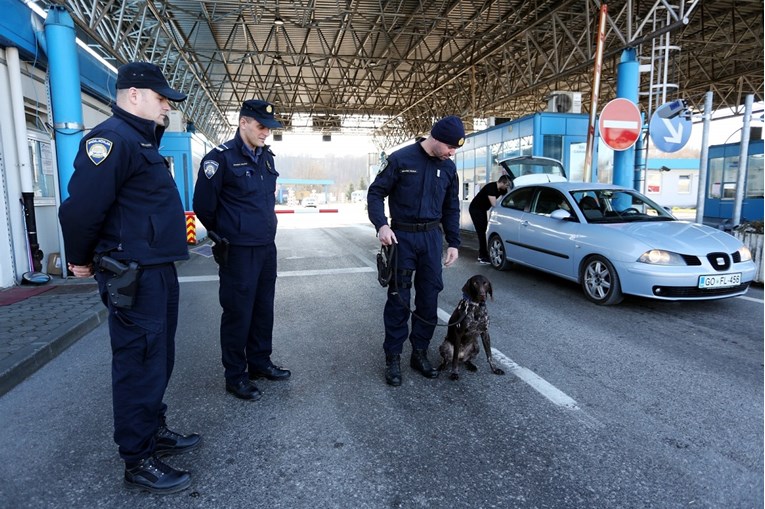
THE CROATIAN Public Health Institute published new recommendations and instructions for people trying to cross the Republic of Croatia's state border.
It's mentioned that the decision doesn't refer to the citizens of the EU, the Schengen Area and third-world countries who are people with permanent residence based on the Council Directive 2003/109/EZ from 25 November 2003, which defines the status of the third-world residents with permanent residence and people who have the right of residence based on other EU directives or national rights, or people who have long-stay visa.
Besides, the decision is not applicable to health care workers, medical researchers and associates, experts for the care of the elderly, people who need emergency treatment, cross-border workers, persons engaged in trade, diplomats, police officials carrying out their duties, Civil Protection staff, international organizations staff, international military personnel carrying out their duties, passengers in transit, persons who cross the border for tourism and other reasons, persons who cross the border for reasons of education and training, persons who come to Croatia for urgent and unavoidable personal reasons (for example, owning a property in Croatia) or have another unavoidable personal reason.
The Croatian Public Health Institute asks to follow the Recommendations for health control over people that enter Croatia from third countries.
Who has to self-isolate?
People who travel from third world countries due to unavoidable personal reasons (for example, owning a property in Croatia), or have another unavoidable personal reason, have to self-isolate for 14 days. The quarantine can be reduced to seven days if a person undergoes PCR testing seven days upon entry to Croatia at his own expense and tests negative for SARS-CoV-2.
For passengers in transit, the border police will, after they are granted entry, check whether they have left the area of the Republic of Croatian within 12 hours. That can be applicable only when exiting Croatia and entering the neighboring countries that will allow entry.
For the people who enter Croatia due to tourism or other business reasons, or who have an economic interest, and people who travel for reasons of education and training can enter the country without a mandatory self-isolation if they show a negative PCR test for SARS-Cov-2, which must not be older than 48 hours (calculating from the time of undergoing testing to arriving at the border crossing), i.e., with mandatory 14 days quarantine if they don't show the above mentioned negative test results.
Mandatory measures
People who enter the Republic of Croatia and are not obliged to the mandatory self-isolation must follow these measures in the first two weeks of staying in Croatia:
- During the first 14 days after entering the Republic of Croatia, leaving the accommodation is limited to work, if the entry into the Republic of Croatia was due to business reasons, and performing necessary activities while continuously adhering to hygienic measures.
- When leaving the accommodation is necessary, it is recommended to use face masks or cloth covering for nose and mouth, maintaining physical distance (minimum 1.5 meters), and maintaining hygiene.
- Hands must be washed as often as possible with warm water and soap, and/or hand disinfectant, which should be thoroughly rubbed between the palms. Avoid touching face, mouth, nose, and eyes.
- Avoid using public transport. In public transport, it's recommended that a person travels alone or only with people who share accommodation.
- Groups and public gatherings should be consistently avoided
- During business meetings, meet as few people as possible, ensure a physical distance of 1.5 meters with disinfectant being readily available, avoid unnecessary meetings.
- Payment should be contactless or made via online services.
- Body temperature should be measured every morning; if it exceeds 37.2°C, it should be repeated after 10 minutes. If the temperature still exceeds 37.2°C, a person should stay at home/in accommodation and contact the competent doctor in tourism or COVID-19 clinic, i.e., the epidemiologist competent for their location in the country.
- In case symptoms of acute respiratory infections (cough, sore throat, elevated body temperature, shortness of breath/difficulty in breathing, or loss of smell) it's necessary to stay at home/in accommodation and contact the competent doctor in tourism or COVID-19 clinic, i.e., the epidemiologist competent for their location in the country.

